
Theosophy : History and Principles
Theosophy - The Topic of the August Moot - 8th August 2025
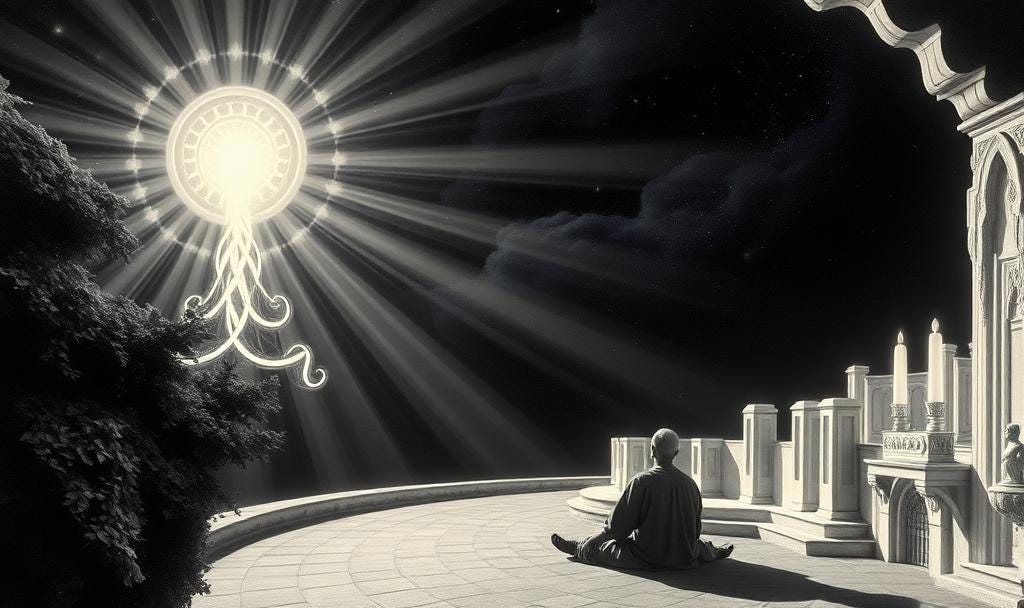
History and Principles of Theosophy
Theosophy, derived from the Greek words "theos" (God) and "sophia" (wisdom), is a spiritual philosophy that seeks to understand the divine nature of humanity and the universe through the synthesis of science, religion, and philosophy.
Emerging in the late 19th century, Theosophy has sought to provide answers to fundamental questions about existence, knowledge, and humanity’s place in the cosmos.
Let’s explore the origins, historical development, and key principles of Theosophy, shedding light on its influence and relevance in contemporary spiritual discourse.
Historical Context
Theosophy as a formal movement was founded in 1875 by Helena Petrovna Blavatsky, Henry Steel Olcott, and William Quan Judge, who established the Theosophical Society in New York City.
Blavatsky, a Russian occultist and spiritual seeker, played a pivotal role in articulating the movement's core ideas through her writings, most notably "Isis Unveiled" (1877) and "The Secret Doctrine" (1888).
Influenced by Eastern religions, particularly Hinduism and Buddhism, Blavatsky sought to weave these ancient traditions with Western thought, advocating for a universal brotherhood transcending religious and cultural boundaries.
The late 19th century was characterised by a burgeoning interest in spiritualism, mysticism, and alternative philosophies, stemming from societal shifts brought about by the Industrial Revolution, scientific advancements, and increasing disenchantment with organised religion.
The Theosophical Society attracted a diverse membership, including intellectuals, artists, and individuals seeking spiritual knowledge, and played a vital role in the popularisation of Eastern philosophies in the West.
Throughout the early 20th century, Theosophy evolved and diversified, with leaders like Annie Besant and Charles Leadbeater expanding its reach and impact. The society established lodges worldwide and contributed to various movements, including the New Age movement and the Human Potential movement. Theosophical ideas also informed the development of modern spiritual practices, such as meditation and holistic healing.
Core Principles of Theosophy
At the heart of Theosophy lies a set of principles that aim to delineate a worldview grounded in spiritual understanding. These principles can be broadly categorised into several key themes:
Unity of All Life: Theosophy posits that all living beings are interconnected through a universal consciousness or divine essence. This underlying unity serves as a foundation for ethical behaviour and social harmony. The belief in the interconnectedness of all life encourages adherents to embrace compassion and altruism, fostering a sense of responsibility towards others and the environment.
Reincarnation and Karma: Central to Theosophical thought is the belief in reincarnation—the idea that the soul undergoes a cycle of birth, death, and rebirth, learning and evolving through successive lifetimes. This process is shaped by karma, the moral law of cause and effect, which dictates that one's actions—whether positive or negative—have consequences that influence future experiences. This understanding encourages individuals to live ethically and mindfully, recognising the long-term impacts of their choices.
Evolution of the Soul: Theosophy asserts that humanity is on a spiritual evolutionary path, where the soul seeks to attain higher states of consciousness. This evolution is not merely physical or intellectual but spiritual, involving the development of virtues such as wisdom, love, and compassion. Theosophy teaches that individuals have the capacity to transcend their limitations and achieve higher states of awareness.
The Wisdom Tradition: Theosophy recognises the existence of a timeless "wisdom tradition"—an accumulation of spiritual truths and insights that have been revealed through various cultures and religions throughout history. This tradition includes teachings from Eastern philosophies such as Hinduism, Buddhism, and Taoism, as well as Western esoteric traditions. Theosophists encourage the study of diverse spiritual texts and practices, promoting a holistic approach to understanding the mysteries of existence.
Spiritual Hierarchy: The concept of a spiritual hierarchy, or "Great White Brotherhood," is central to Theosophical thought. This hierarchy consists of advanced spiritual beings, often referred to as "Masters" or "Ascended Beings," who guide humanity's spiritual evolution. According to Theosophy, these beings work to assist and inspire individuals in their quest for enlightenment, acting as mentors and protectors of human progress.
Influence and Legacy
The influence of Theosophy has been far-reaching, impacting various spiritual and philosophical movements in the 20th century and beyond.
Its emphasis on the unity of all life and the importance of personal spiritual development resonated with the New Age movement, which sought to transcend traditional religious boundaries and embrace a more holistic, eclectic approach to spirituality.
Moreover, Theosophy helped to pave the way for the popularisation of Eastern philosophies and practices in the West, contributing to the growing interest in meditation, yoga, and holistic healing modalities.
The Theosophical Society’s outreach and educational initiatives facilitated the introduction of concepts such as mindfulness, energy healing, and the interconnectedness of mind, body, and spirit into mainstream Western thought.
Prominent figures in the Theosophical movement, such as Annie Besant and Krishnamurti, furthered its reach. Besant, who succeeded Blavatsky as the head of the Theosophical Society, actively promoted social issues including women's rights, education, and labour reform, embodying the Theosophical principle of compassion in action. Krishnamurti, initially groomed by Theosophy as a potential World Teacher, ultimately distanced himself from the organisation to forge an independent path. Yet, his teachings on self-inquiry and psychological transformation reflected Theosophical ideals.
Theosophy’s legacy can also be seen in its contributions to modern spirituality and philosophy, where ideas of unity and interconnectedness resonate with contemporary ecological movements and holistic worldviews. The emphasis on personal spiritual growth and responsibility remains relevant as more individuals seek meaning and purpose beyond material success and conventional religious practices.
Critique and Controversies
Despite its influence, Theosophy has not been without its critics and controversies. Critics have raised concerns about its eclectic nature, arguing that its blending of various traditions can lead to a superficial understanding of complex spiritual teachings. Moreover, some aspects of Theosophical doctrine, particularly its racial theories articulated in Blavatsky’s works, have been scrutinised for promoting ideas of superiority and elitism, sparking debates about the movement's inclusivity and the ethical implications of its teachings.
Additionally, some traditional religious groups have viewed Theosophy with suspicion, regarding its syncretic approach as a dilution of authentic spiritual truth. The tension between Theosophy's universalist aspirations and the particularistic claims of established religions continues to be a point of contention.
Conclusion
Theosophy, with its rich tapestry of spiritual insights and philosophical principles, has left an indelible mark on modern spirituality. By emphasising the interconnectedness of all life, the evolution of the soul, and the pursuit of wisdom, Theosophy encourages individuals to embark on their unique spiritual journeys while fostering a sense of collective responsibility towards humanity and the planet. Its historical context, core teachings, and legacy demonstrate its enduring relevance in an increasingly complex and interconnected world. As we navigate the challenges of the 21st century, the principles of Theosophy invite us to reconsider our relationship with each other and the universe, urging a deeper engagement with the mysteries of existence and the quest for higher understanding.
While Theosophy's contribution to spiritual discourse has been significant, it serves as a reminder of the continual evolution of thought in the realm of spirituality. Its teachings prompt vital questions about the nature of knowledge, the sources from which we derive our spiritual beliefs, and the ethical consequences of our actions across time and space.
Engaging with Theosophy today encourages individuals to explore alternative perspectives on consciousness and existence, and to integrate these insights into their daily lives. The concepts of reincarnation and karma, for instance, challenge the immediate materialist worldview and promote a longer-term perspective on moral choices, emphasising the importance of cultivating virtues that contribute to the greater good.
In this era of globalisation, Theosophy’s call for a universal brotherhood resonates powerfully, advocating for unity in diversity and the recognition that, despite our differences, we share a common essence. This perspective can help mitigate divisions within societies and foster greater understanding and compassion across cultural and religious boundaries.
Furthermore, the Theosophical Society's advocacy for education, self-awareness, and social reform continues to inspire movements for justice and equality. By reflecting on the teachings of Theosophy, individuals can become more conscious of their roles as global citizens, fostering a mindful approach to life that engages with both personal spiritual development and collective well-being.
The study of Theosophy offers an enriching framework for understanding the depth of human experience and our place within the cosmos. Its principles not only invite a profound exploration of spiritual truths but also beckon us to co-create a harmonious world built on respect, empathy, and love for all living beings. As we continue to seek answers to the profound questions of existence, Theosophy remains a valuable resource, illuminating the path towards greater wisdom and understanding. Thus, as we advance into the future, the teachings of Theosophy serve both as a compass and a catalyst for spiritual awakening, calling us all to participate actively in the ongoing evolution of consciousness.
Alan /|\
In this month's moot, we will delve deeper into Theosophy and, in particular, the teachings of Madam Blavatsky.
As always, it’s FREE to attend this Moot. It will be recorded, and these recordings are available to subscribers of The School Moots.
(50+ hours of video talks on a wide range of Magickal, Mystical and Occult topics available to subscribers of the TSMM Moot Recordings)
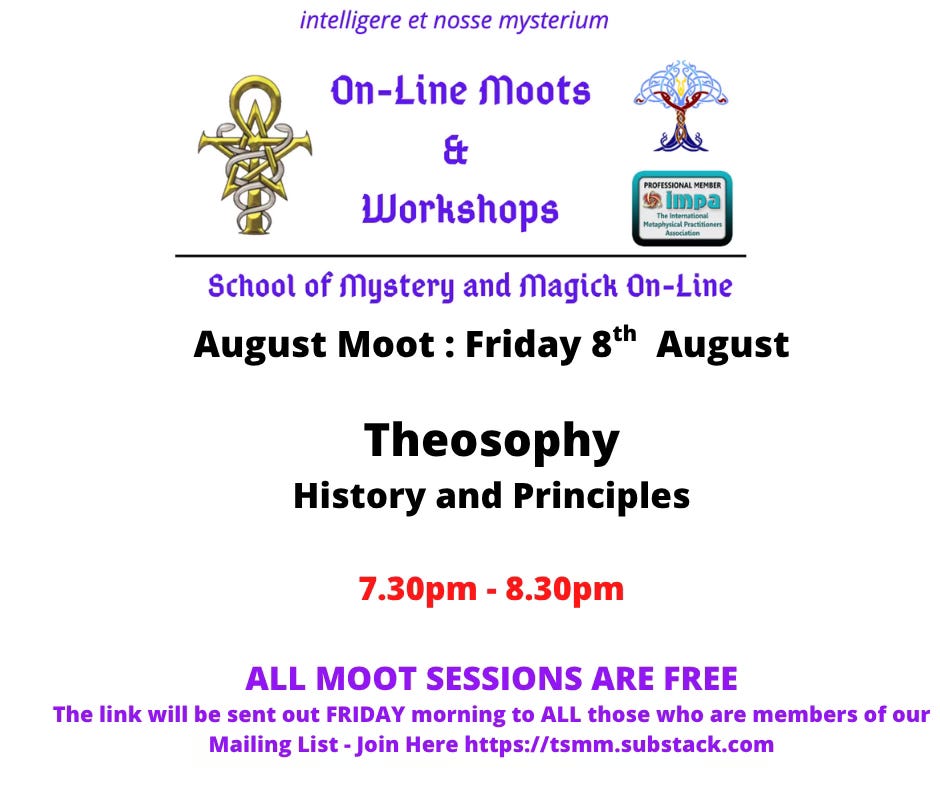
An invite and link reminder will be sent to subscribers of this newsletter on Friday morning.
Thanks for reading
Alan /|\
This philosophy is really interesting. I enjoyed reading about it!