
The Gnostic Gospels
Hidden Voices of Early Christianity

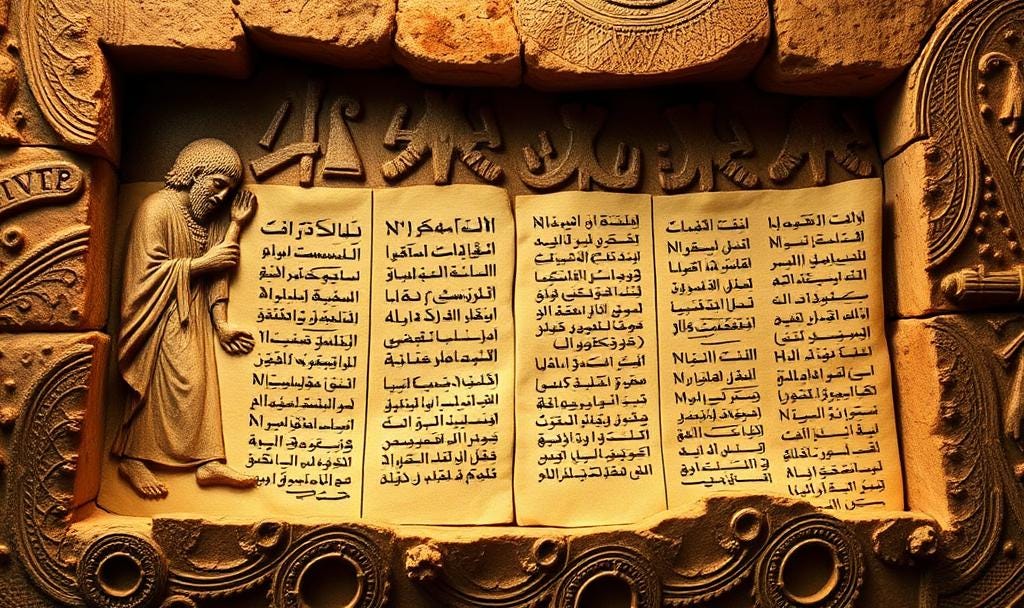
The Gnostic Gospels: Hidden Voices of Early Christianity
In December 1945, an Egyptian farmer named Muhammad Ali al-Samman was digging for fertiliser near the town of Nag Hammadi when his shovel struck something hard. Inside a sealed earthenware jar, he discovered thirteen leather-bound codices, ancient books that would revolutionise our understanding of early Christianity. These texts, which came to be known as the Nag Hammadi library, contained over fifty writings, including several “Gnostic Gospels” that had been lost for nearly 1,600 years.
The Discovery and Its Context
The Nag Hammadi texts date from approximately the 3rd and 4th centuries CE, though many are Coptic translations of earlier Greek works likely composed in the 2nd century. They were probably buried by monks from a nearby monastery around 367 CE, possibly in response to a decree by Bishop Athanasius of Alexandria ordering the destruction of “heretical” texts.
This wasn’t the first discovery of Gnostic materials. The Berlin Codex, acquired in 1896, contained similar texts, including the Gospel of Mary. However, Nag Hammadi provided an unprecedented cache of primary sources, enabling scholars to study Gnosticism through its own writings rather than relying on hostile descriptions by its opponents.
What is Gnosticism?
Gnosticism wasn’t a single unified movement but rather a diverse collection of early Christian sects that shared certain core beliefs. The term comes from the Greek word gnosis, meaning “knowledge.” Gnostics believed that salvation could be achieved through special spiritual knowledge, rather than through faith or works alone.
Central to most Gnostic thought was a radical dualism: the material world was viewed as flawed or even evil, created not by the true God but by a lesser, ignorant deity known as the Demiurge (often identified with the God of the Old Testament). The true God was wholly spiritual and transcendent. Humans possessed a divine spark trapped in material flesh, and gnosis—secret knowledge of one’s true divine nature—was the key to liberation.
Why Were They Excluded?
The exclusion of Gnostic texts from the biblical canon was the result of several factors:
Theological Incompatibility: Gnostic beliefs fundamentally contradicted what became orthodox Christianity. Their negative view of the material world clashed with the biblical account of creation as “good.” Their distinction between the creator God and the true God undermined the concept of monotheism. Most significantly, many Gnostic texts presented a very different understanding of Jesus—often depicting him as a revealer of hidden knowledge rather than as a saviour who died for humanity’s sins.
The Question of Apostolic Authority: Church fathers developing the canon sought texts with clear apostolic origins or connections. While some Gnostic gospels claimed authorship by apostles (Thomas, Philip, Mary Magdalene), these attributions were viewed as pseudonymous by church authorities, written long after the apostles’ deaths.
Dating and Historical Distance: Orthodox church leaders favoured texts written closer to Jesus’s lifetime. The canonical gospels (Matthew, Mark, Luke, and John) were generally dated to the late 1st century, while most Gnostic texts emerged in the 2nd century or later, reflecting developed theological speculation rather than historical witness.
Institutional Consolidation: By the 2nd and 3rd centuries, Christianity was establishing unified doctrine and institutional hierarchy. Gnostic Christianity, with its emphasis on personal revelation and esoteric knowledge, threatened this consolidation. Leaders like Irenaeus of Lyon actively combated Gnostic teachings as heresy, arguing for a unified interpretation based on apostolic succession.
Revelations from the Gnostic Gospels
The Nag Hammadi texts offer fascinating alternative perspectives on Jesus, creation, and salvation:
The Gospel of Thomas is perhaps the most famous, containing 114 sayings attributed to Jesus with no narrative framework. Some sayings parallel those in canonical gospels, while others are strikingly different. For example: “If you bring forth what is within you, what you bring forth will save you. If you do not bring forth what is within you, what you do not bring forth will destroy you.” This emphasises self-knowledge and inner transformation over external salvation.
The Gospel of Philip contains complex theological reflections, including discussions of sacraments and mystical union. It mentions Mary Magdalene as Jesus’s companion and suggests she was closer to him than the male disciples, sparking modern fascination with her role in early Christianity.
The Secret Book of John (also known as the Apocryphon of John) presents an elaborate creation myth. It describes how the true God emanated divine beings called Aeons, one of whom (Sophia, or Wisdom) inadvertently created the Demiurge. This fallen deity then created the material world in ignorance, trapping divine sparks in human bodies.
The Gospel of Mary (from the Berlin Codex) portrays Mary Magdalene as receiving special revelation from Jesus and teaching the other disciples. When Peter questions whether Jesus would really speak privately with a woman, Levi defends her: “If the Saviour made her worthy, who are you to reject her?” This text suggests early tensions over women’s leadership roles.
The Gospel of Judas (discovered separately in the 1970s) presents Judas not as a villain but as Jesus’s most understanding disciple, who helps Jesus escape his physical body through betrayal—a spiritual favour rather than a treacherous act.
Scholarly Significance and Controversy
The Gnostic Gospels have profoundly impacted biblical scholarship and popular understanding of Christian origins. They reveal that early Christianity was far more diverse than previously understood, with competing interpretations of Jesus' message coexisting for centuries before orthodoxy emerged as the dominant view.
However, scholarly consensus maintains that important distinctions exist. While these texts illuminate the religious landscape of the 2nd and 3rd centuries, they don’t generally provide reliable historical information about Jesus himself, who lived in the early 1st century. The canonical gospels, despite their own theological agendas, remain closer to the historical events they describe.
The popular reception of the Gnostic Gospels has sometimes outpaced careful scholarship. Works like “The Da Vinci Code” have woven Gnostic materials into conspiracy theories about suppressed truth. Still, most scholars see the canon’s formation as a comprehensible historical process rather than a sinister cover-up.
Enduring Questions
The Gnostic Gospels continue to raise profound questions: Who gets to determine authentic Christianity? How much diversity can a religious tradition accommodate? What was lost when certain voices were silenced?
These ancient texts remind us that religious traditions are not monolithic but emerge through complex historical processes of inclusion, exclusion, and negotiation. They show us Christians of the 2nd and 3rd centuries wrestling with fundamental questions about the nature of God, the problem of evil, the meaning of salvation, and the status of the material world—questions that still resonate today.
Whether viewed as dangerous heresy or as suppressed wisdom, the Gnostic Gospels have secured their place as crucial witnesses to Christianity’s diverse and contentious origins, offering modern readers a glimpse into the rich complexity of the early Christian experience.
Alan /|\
This month’s Moot is on the Gnostic Gospels and what we can learn from them…
Friday, March 13th …
The link to this FREE Moot will be sent to subscribers on the morning of the 13th